Blister packaging is a versatile packaging solution used for electronics, cosmetics, hardware, toys, and other consumer products. But what exactly is blister packaging, and how do you use it for coins and gold bars?
RRainbow Collection, as a direct manufacturer with 16 years of experience in precious-metal packaging and display, we share a practical guide to its applications, benefits, and customization options. We also explain the key factors to consider when choosing a blister packaging supplier for your business.
What Is Blister Packaging?
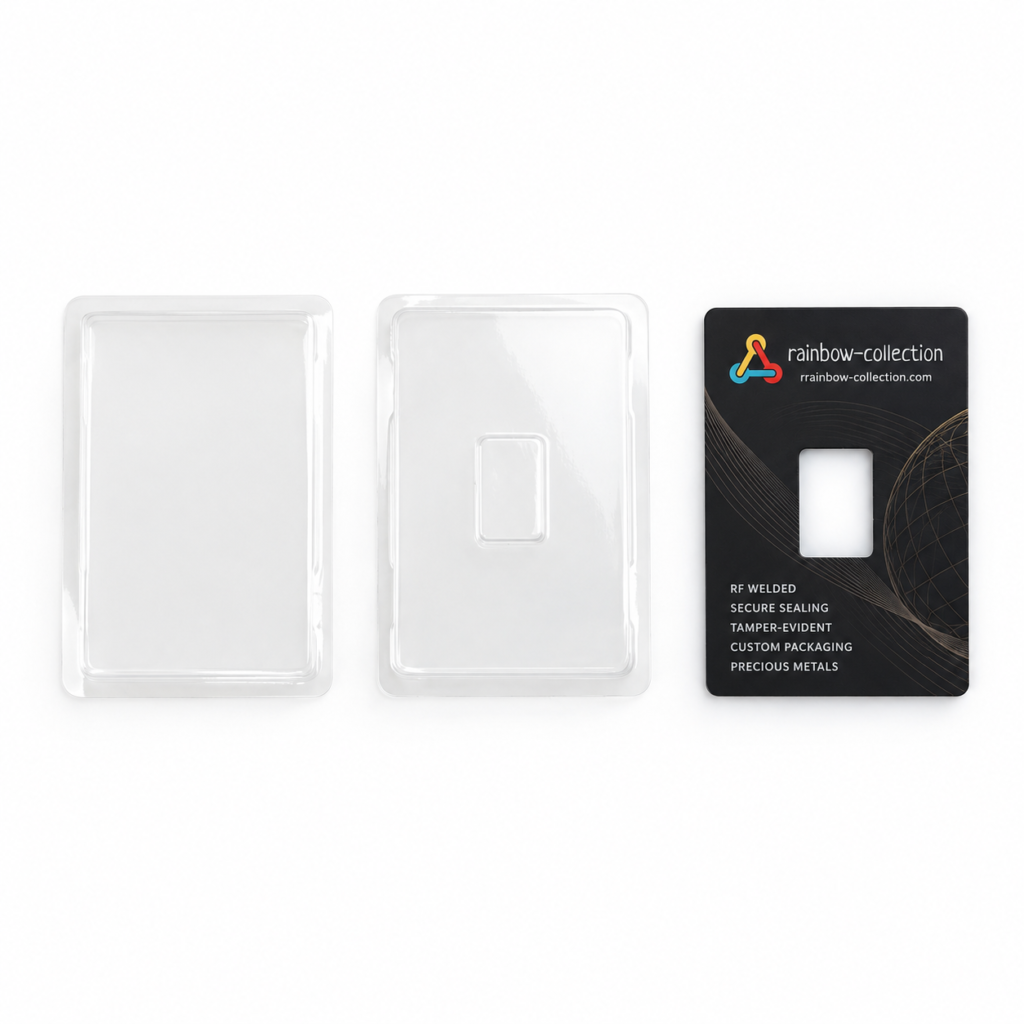
Blister packaging holds a product in a pre-formed cavity or pocket, usually combined with a backing card, film, or foil. The term “blister” refers to this shaped cavity.
Plastic blisters can be made from materials such as PET or PVC. The cavity is typically produced through thermoforming, in which a heated plastic sheet is shaped using vacuum or air pressure. In carded blister packaging, the product sits between the formed blister and a paperboard or plastic backing.
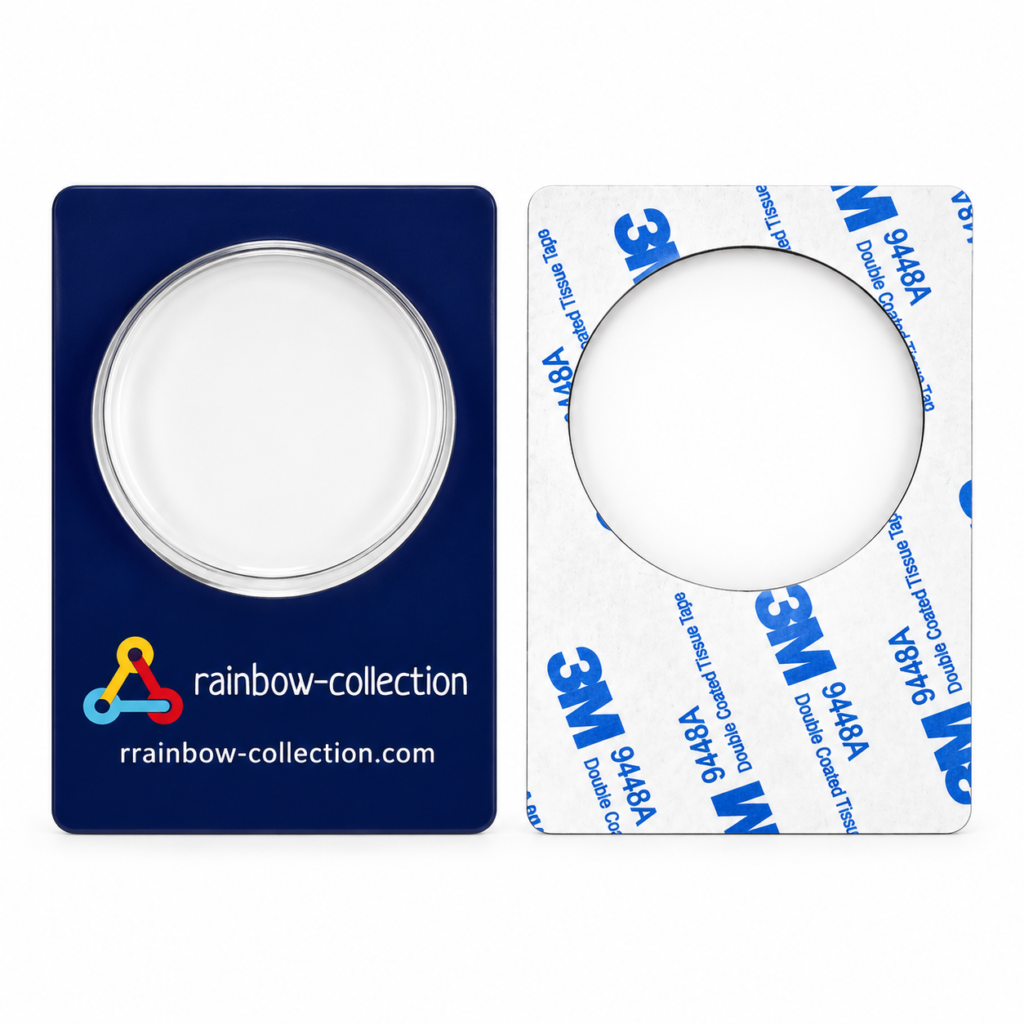
The closure method depends on the materials and package design. Options include heat sealing and adhesive bonding, such as double-sided tape. Some compatible plastic constructions can also use radio-frequency (RF) sealing.
Transparent plastic blisters let customers view the product while limiting direct handling. Moisture resistance and tamper-evident features depend on the materials, construction, and seal. Other formats include aluminum-based and all-paper blister packaging, but this guide focuses on blister packaging for coins and gold bars.
How Is Blister Packaging Used for Coins and Gold Bars?
For coins and gold bars, blister packaging uses a fitted cavity to hold the product in position. Clear blister packaging displays the product while limiting direct handling. Printed cards also provide space for branding and product information.
At RRainbow Collection, our options include clear PET blister cards with screen-printed or CMYK-printed designs, as well as plastic shells containing printed paperboard inserts. Depending on the design, we can print branding and product information on the plastic card or a separate paperboard insert.
Self-adhesive designs use premium double-sided tape, while other compatible constructions can use heat sealing or radio-frequency (RF) sealing. The appropriate closure depends on the materials and package design. Printed areas can carry customer-supplied logos, product information, serial numbers, and QR codes.
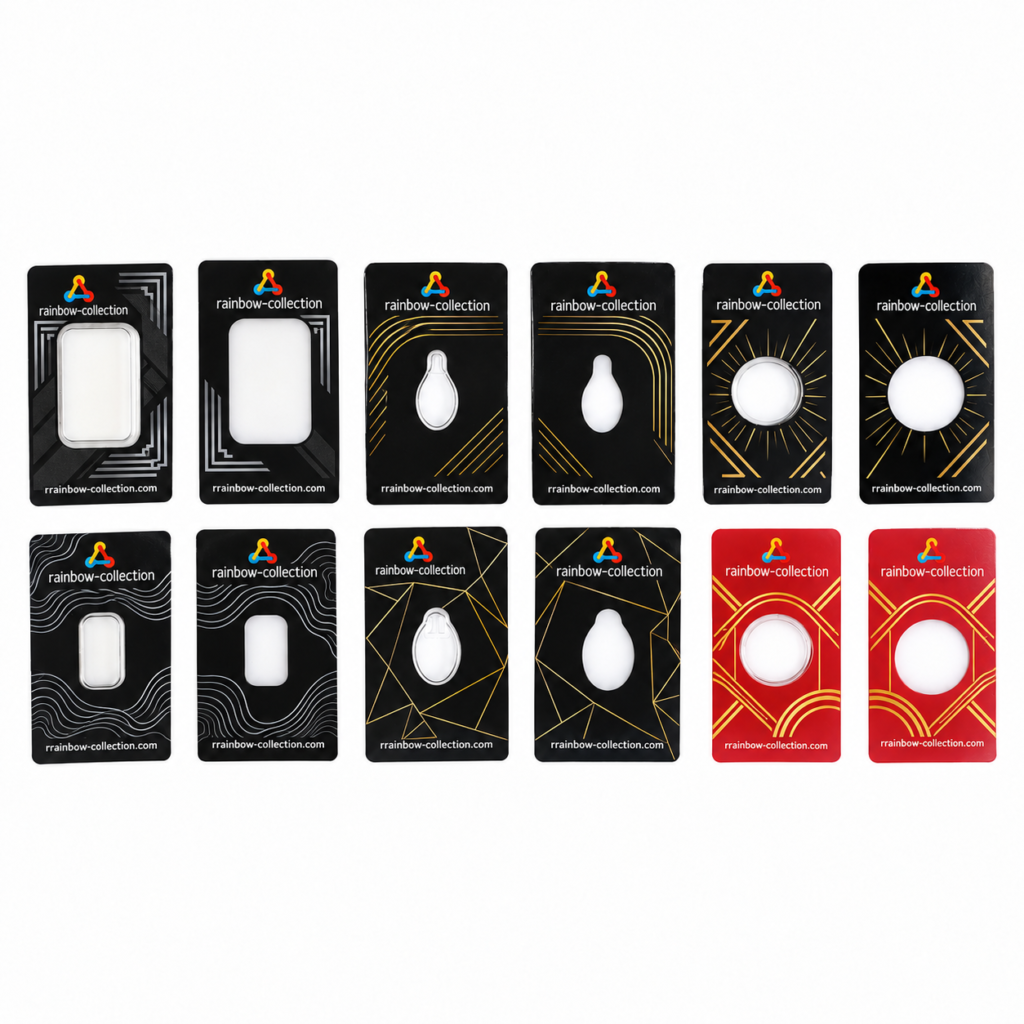
These constructions can be adapted for round coins, rectangular gold bars, and custom-shaped precious metal collectibles. For commemorative coins, printed artwork can highlight a theme or occasion while keeping the coin visible. Products with non-standard profiles require a cavity that matches their shape and depth.
Shape alone does not determine the right package. Before selecting a design, confirm the coin’s diameter and thickness, or the bar’s length, width, and thickness, together with the required fit and clearance. Custom-shaped products may also require a dimensioned drawing or a physical sample.
One of our standard outer card sizes is 86 × 54 mm. This describes the overall card dimensions; the internal cavity is specified separately to fit the product. Other outer card sizes can also be customized, and we can review existing molds or develop a custom cavity for your project.
Why Use Blister Packaging for Coins and Gold Bars?
For mints, bullion brands, and precious-metal dealers, blister packaging combines product visibility, protection, and custom presentation in a card-style format. Depending on the design, it can also incorporate product identifiers and tamper-evident features. Its main advantages include:
1. Clear Product Visibility
Clear viewing areas let you and your customers see the coin’s design, the bar’s markings, and other details while the product remains enclosed. This supports product presentation and visual checks without repeatedly opening the package.
2. Reduced Scratches and Fingerprints
With suitable materials and a cavity matched to the product’s dimensions, blister packaging helps limit unwanted movement and rubbing. The closed package also reduces direct contact with the metal, helping to minimize fingerprints and handling marks. When a coin is packed inside a capsule, the cavity should be designed around the capsule’s outer dimensions.
3. Custom Branding and Artwork
Printed cards provide space for logos, imagery, and themed artwork. Full-color CMYK printing can reproduce photographic images, shadows, and smooth color gradients, supporting branded bullion products, commemorative releases, and gift collections. At RRainbow Collection, our options include screen-printed and CMYK-printed PET blister cards, as well as plastic blister structures with printed paperboard inserts. You can select the printing method and custom card construction to suit the artwork and desired presentation.
4. Unique Product Identification
Where individual identification is required, unique serial numbers and linked barcodes or QR codes can connect each pack to the brand’s corresponding product record. This supports product lookup and record checking while keeping the identifiers with the packaged item. For projects requiring QR-based verification or NFC authentication, specify the supporting data and verification system separately from the physical packaging.
5. Optional Tamper-Evident Features
Where tamper evidence is required, suitable seals or destructive security layers can be incorporated to reveal opening. These features help you and your customers check whether the package shows signs of opening. Test the finished design to confirm the intended signs of opening, rather than assuming every sealed blister package provides the same level of tamper evidence.
6. Packaging Cost Control
Blister packaging can be a cost-effective option for bulk orders of coins and gold bars, offering custom-fit cavities and printed designs while keeping the product visible and helping to protect it.
At RRainbow Collection, we check our existing molds for a suitable fit before developing a custom mold. Using an existing mold can reduce upfront tooling costs and shorten development time. You can also select materials, printing, sealing methods, and security features to suit your design, order quantity, and budget.
What Customization Options Are Available?
At RRainbow Collection, customization options for coins and gold bars cover card structure, printing, sealing methods, and optional labels. We also offer high-clarity, unprinted blister cards for projects that require a clear view of the product without printed artwork.
The following five configurations can share features: printing and label options can be combined with compatible card designs.
| No. | Configuration | Structure | Printing | Sealing Method | Optional Features |
| 1 | Screen-Printed Blister Cards | Two plastic card panels with a fitted cavity | Screen printing for logos, text and solid-color artwork | Manual closure using double-sided adhesive tape | Serial numbers, QR codes or compatible labels |
| 2 | CMYK-Printed Blister Cards | Two plastic card panels with a fitted cavity | Full-color CMYK for photographs, gradients and themed artwork | Manual closure using double-sided adhesive tape | Serial numbers, QR codes or compatible labels |
| 3 | Plastic Blisters with Paperboard Inserts | Two plastic panels enclosing a printed paperboard insert | Artwork and product information printed on the insert | RF sealing for compatible constructions | Serial numbers, QR codes or compatible labels |
| 4 | Heat-Seal Adhesive Blister Cards | Compatible plastic card panels | Artwork specified to suit the material and heat-sealing process | Heat-activated adhesive, without separate double-sided tape | Custom labels, subject to design compatibility |
| 5 | NFC Tags and Custom Labels | A compatible blister card with an added tag or label | Follows the chosen card design | Follows the chosen card design | Web links, product-record links or custom label information |
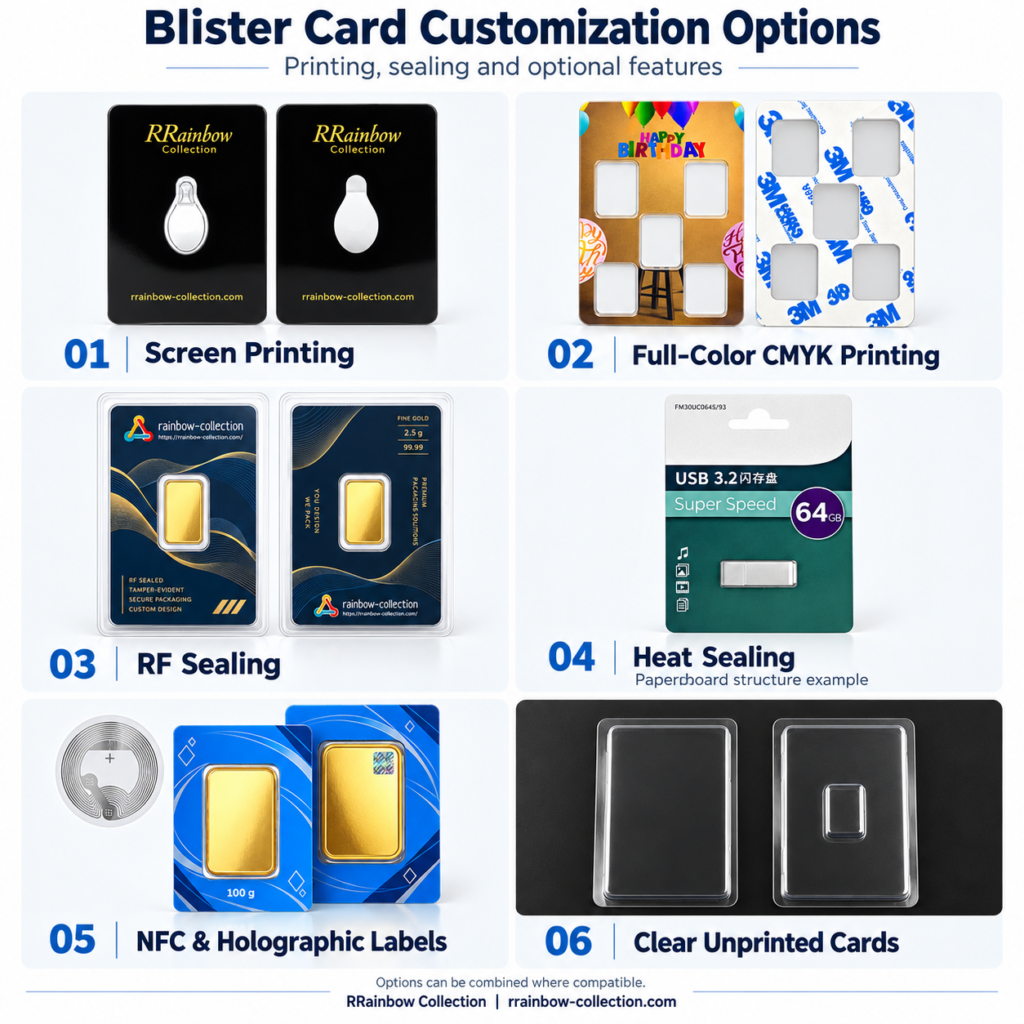
At RRainbow Collection, we can customize security labels and integrate compatible NFC tags to support more advanced anti-counterfeiting requirements for coin and gold bar packaging. We have experience producing security labels for trading card holders and graded coin slabs. For NFC-based authentication, specify the chip, encoding, and supporting verification system separately for each project.
We normally supply empty blister cards. You or your packing partner will insert the coin or gold bar and complete the final seal using the method specified for the chosen design.
What Should You Check When Choosing a Blister Packaging Supplier?
For coin and bullion brands, packaging should help protect the product, complement its design, and communicate the brand’s identity.
When choosing a blister packaging supplier for coins and gold bars, check product fit, materials, print quality, who handles loading and sealing, and delivery terms. Confirm the following points before approving bulk production:
1. Product Fit and Mold Options
Provide the coin’s diameter and thickness, or the bar’s length, width, and thickness. Include capsule dimensions where relevant. Ask whether an existing mold provides the required fit and clearance, or whether custom tooling is needed.
2. Material Specifications and Documents
Confirm the material grade, sheet thickness, and any layers that contact the product, including adhesives or coatings. Check suitability for the intended storage conditions. Request supporting documents for material claims, recycled content, and any relevant target-market requirements.
3. Printing and Artwork
Review a printed sample on the intended plastic card or paperboard insert. Check color, image detail, text legibility, and the clear viewing area. Confirm that the printing method and finish suit your approved artwork.
4. Product Loading and Final Sealing
Agree who will insert the coin or bar and who will perform the final sealing: your team, the supplier, or a packing partner. Confirm whether you will receive empty components or an assembly-ready design. Specify the closure method, any equipment required, and the sealing instructions.
5. Security and Verification Options
Specify the tamper-evident and identification features your project requires. Distinguish QR-code printing from an online verification service, and clarify who handles serial-number data or NFC encoding. Where applicable, test opening evidence and NFC performance with the actual product inside the finished pack.
6. Design and Mold Confidentiality
For confidential artwork or security designs, agree on an NDA before sharing files. Specify artwork permissions, mold ownership, and any restrictions on mold reuse in writing. Clarify whether the supplier may display the finished design in its portfolio.
7. MOQ, Pricing and Lead Times
Confirm the MOQ for your chosen design and options. Separate tooling fees, sample charges, and unit prices in the quotation. Agree on sample and production lead times, their starting points, and how new tooling or artwork revisions may affect the schedule.
8. Samples and Factory Checks
Approve a sample before bulk production and check fit, printing, closure, and finish against agreed acceptance criteria. Review relevant previous work and factory photos or videos. Confirm the quality-control process and whether factory visits or third-party inspections can be arranged.
9. Packing, Shipping and After-Sales Support
Check how finished cards will be protected against scuffing, bending, and compression during shipping. Agree on the delivery term and named place or port, who is responsible for customs clearance, duties, and insurance, and the process for handling manufacturing defects, transit damage, and replacements.
Conclusion
The right blister packaging depends on your product’s dimensions, display needs, and sealing requirements. The cavity, materials, and printed design should work together to protect the product and support its presentation.
At RRainbow Collection, we manufacture custom blister packaging for coins and gold bars, drawing on 16 years of experience in precious-metal packaging and display. Our options include screen printing, full-color CMYK printing, and optional tamper-evident features. We offer a wide range of existing molds and custom mold development.
From clear, unprinted cards to coordinated branded packaging for a product line, you can select printing and security options to suit your project and budget.
Email your product dimensions, order quantity, artwork or design requirements, and sealing needs to info@rrainbow-collection.com, or WhatsApp Number:+852 9466 3444. We can then review mold options, discuss samples, and provide a quotation based on the agreed specifications.
Frequently Asked Questions
Q1. Can coins or gold bars of the same weight use the same blister cavity?
Not necessarily. Products of the same weight can have different dimensions, shapes, and thicknesses. An existing cavity should be checked against your actual coin or bar, including the required clearance. If the coin is already inside a capsule, use the capsule’s outer dimensions when assessing fit.
Q2. What is the minimum order quantity, and can I order a small prototype batch?
At RRainbow Collection, our standard MOQ for custom designs is 1,000 pieces. We review smaller orders or prototype requests individually, depending on mold availability, card construction, printing, and security features. We quote sample quantities separately from bulk production orders.
Q3. What affects the cost of custom blister packaging?
Pricing depends on the order quantity, card dimensions, cavity design, materials, printing, sealing method, and security features. A suitable existing mold can reduce the need for new tooling. When comparing quotations, include tooling fees, sample charges, and shipping alongside the unit price.
Q4. Can I load and seal the blister cards myself without special equipment?
For designs with pre-applied double-sided adhesive tape, you can insert the product, remove the release liner, and press the panels together according to the sealing instructions. These designs do not require heat-sealing equipment. Heat-seal adhesive and RF-sealed constructions require suitable equipment. We normally supply empty blister cards for you or your packing partner to load and seal.
Q5. How can I keep a small gold bar from moving without damaging it?
The cavity needs to balance secure positioning with suitable clearance. An oversized cavity may allow movement, while an overly tight fit can put pressure on the bar. Review any retention features or contact areas on the actual product, and check a sample for movement, rubbing, and pressure marks.
Q6. Can I approve a sample before bulk production, and how long does the process take?
Yes. We offer pre-production samples so you can check product fit, printing, finish, and closure before approving bulk production. We confirm sampling and production lead times separately for each project. New tooling, artwork revisions, and additional security features can affect the schedule, and shipping time should also be included in your launch plan.
Q7. Can the packaging leave permanent evidence of opening?
Suitable designs can incorporate seals or destructive security layers intended to leave visible, irreversible evidence of opening. Specify this requirement when requesting a quotation and test the finished sample against agreed acceptance criteria. A sealed blister should not automatically be assumed to provide this level of tamper evidence.
Q8. Does QR-code or NFC customization include an online verification system?
Not automatically. QR-code printing and NFC-tag integration are separate from providing an online verification service. The project should specify the required data, chip, encoding, verification system, and who manages each element. For NFC designs, reading performance should also be tested with the actual coin or gold bar inside the sealed package.